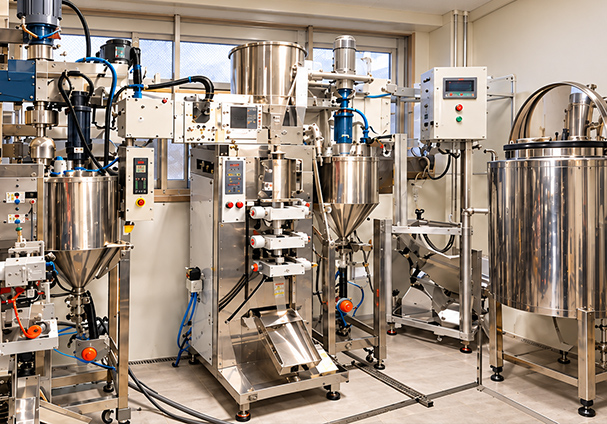
Production System
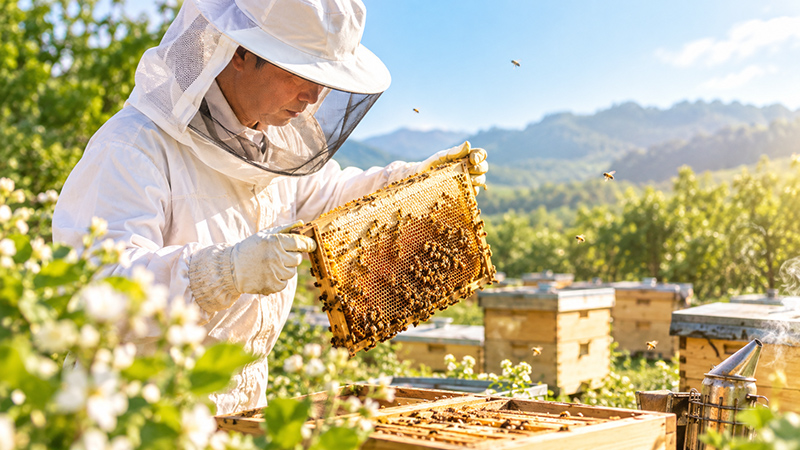
From late April to late June—a period of about two months—I engage in migratory beekeeping, traveling across the country to harvest natural honey. The first harvest is acacia honey; I begin in Masan, Gyeongsangnam-do, in late April, where I collect honey for about two weeks before moving on—stopping in Daegu, Icheon (Gyeonggi-do), and Pocheon (Gyeonggi-do) over the course of another two weeks. Once the acacia blossoms fade, I move to the area around Chukryeongsan Mountain in Jangseong-gun to harvest wildflower (polyfloral) honey for about three weeks. Following this, I travel to Gongju, Chungcheongnam-do, to harvest chestnut blossom honey for approximately two weeks. The honey collected from each type of flower is portioned into 25kg units and undergoes a concentration process to remove impurities and excess moisture.
In the production area, the contents of 25 kg bulk containers are repackaged into stick-type or tube-type units, depending on the current product inventory levels.
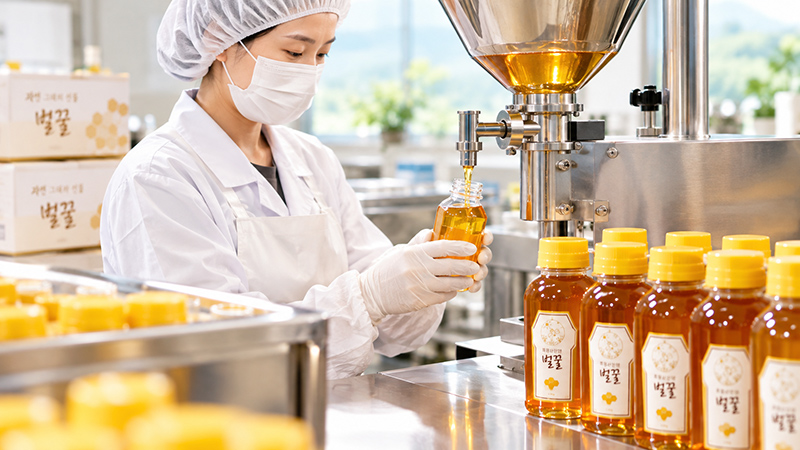
Honey is packaged into smaller portions and sold through both online and offline channels. In the offline space, sales are conducted by traveling to various venues—such as nationwide festivals, direct-to-consumer markets, trade expos, and flea markets—where a diverse customer base can be found.

Information on Hygienic and Clean Facilities
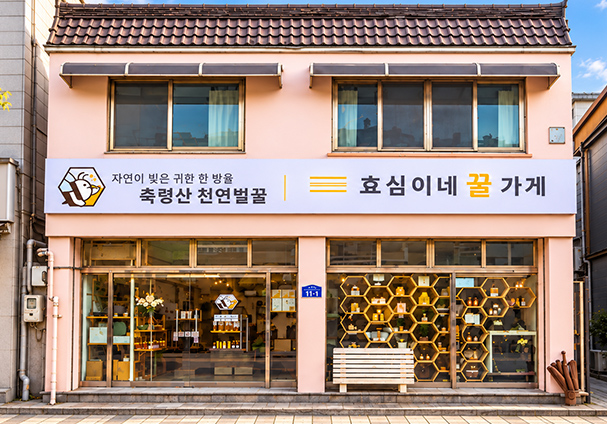
Outside Facility
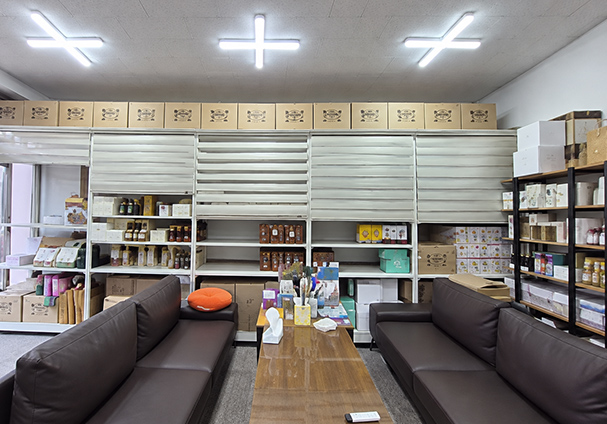
Facility Entrance
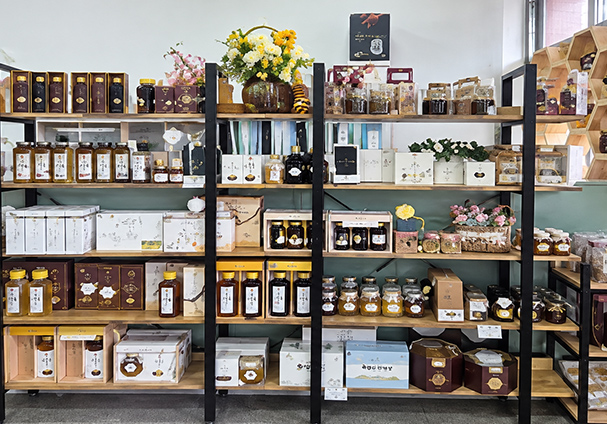
Interior Area 1
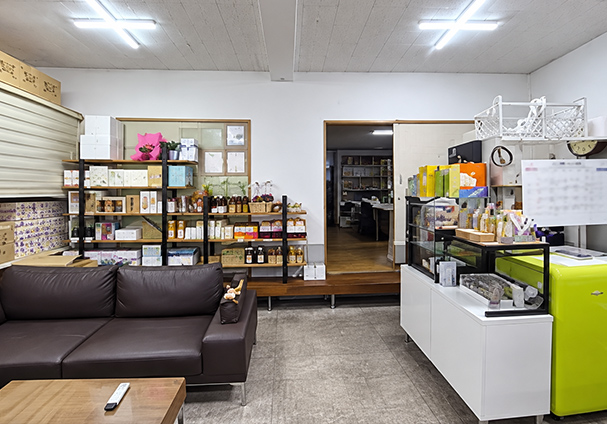
Interior Area 2
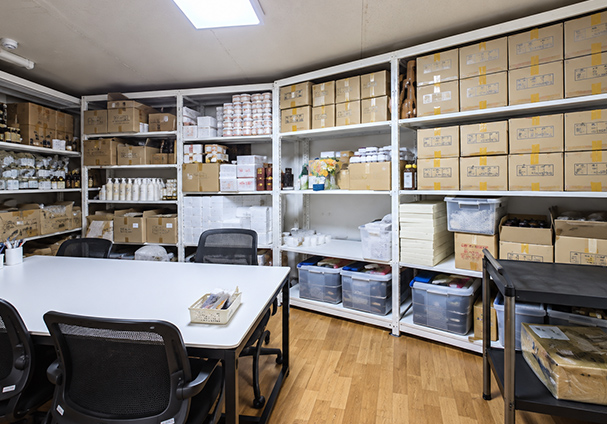
Interior Area 3